
Gunnar Rundgren has worked with most parts of the organic farm sector. He has published several books about the major social and environmental challenges of our world, food and farming.


Insight and inspiration in turbulent times.
Gunnar Rundgren has worked with most parts of the organic farm sector. He has published several books about the major social and environmental challenges of our world, food and farming.

Summing up, I believe there are many indications that the ever increasing complexity clearly shows diminishing returns and that people will turn their backs on global capitalism and modernity (whatever that is).
May 20, 2025

Even if I don’t fully agree with Wilkinson’s thesis that development is driven by need, I think he demonstrates quite well that in a long term perspective, we actually spend more and more effort to maintain human societies. Most of that work is today based on external energy resources and overuse of biological and mineral resources.
April 21, 2025
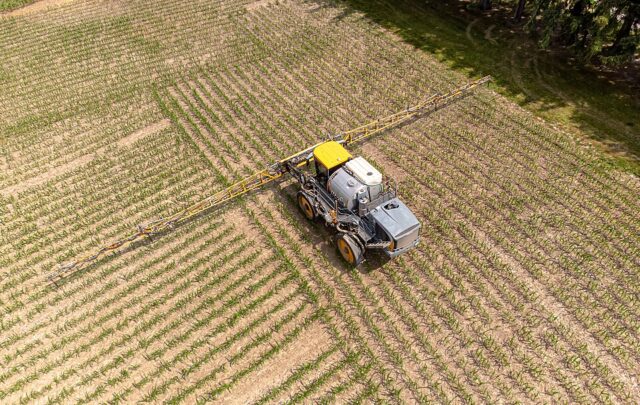
There are multiple reasons for why food prices are on the rise. There are major similarities between the FAO food price index and energy prices. This is also quite natural as energy is a major input in the whole food system.
April 4, 2025

In this last article in the series, I turn to what a resilient, sustainable food system could look like. I will first discuss the agronomic side of the system and then the socio-economic part. In my view they are just two aspects of the same system.
March 13, 2025

Of course, in the end, you can’t decouple farming (or any other human endeavour) from the ecological frameworks. The global commodified food system has a global impact on the whole Earth system, primarily through its impact on the critical cycles of carbon, water and nitrogen. These, in turn, also influence the global food system.
March 4, 2025
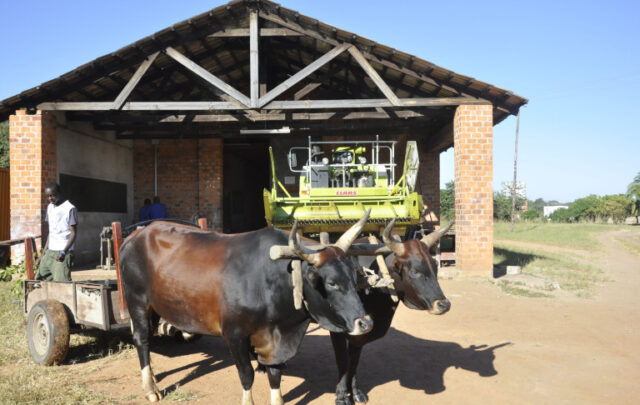
The rise of supermarket chains, the fast food chains, factory farming, food waste, the conversion of landscapes into monocultures, food deserts, obesity, malnutrition, ultra-processed food, you name it –the four mega-drivers have a lot more explanatory power than the prevailing, and infantile, narrative of consumer preferences.
February 14, 2025