

For the next few weeks, the buzzword in US debates on the liberal/left about economics and ecology will be “abundance” after the release of the book with that title by Ezra Klein (New York Times) and Derek Thompson (The Atlantic magazine).
The book poses politically relevant questions: Have policies favored by Democrats and others on the political left impeded innovation with unnecessary red tape for building projects? Can regulatory reform and revitalized public investment bring technological progress that can solve problems in housing, infrastructure, energy, and agriculture? The book says yes to both.
Those debates have short-term political implications but are largely irrelevant to the human future. The challenge is not how to do more but how to live with less.
All societies face multiple cascading ecological crises—emphasis on the plural. There are many crises, not just climate change, and no matter what a particular society’s contribution to the crises there is nowhere to hide. The cascading changes will come in ways we can prepare for but can’t predict, and it’s likely the consequences will be much more dire than we imagine.
If that seems depressing, I’m sorry. Keep reading anyway.
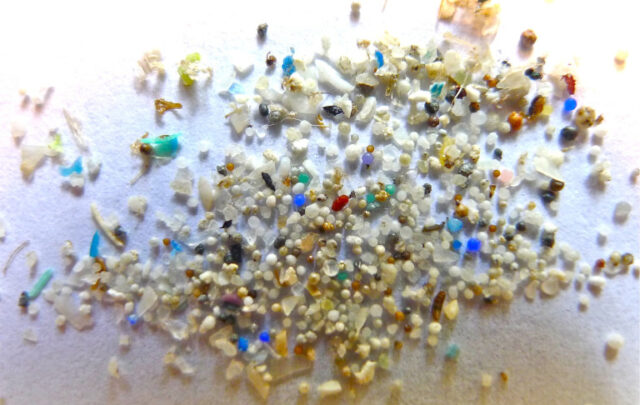
Rapid climate disruption is the most pressing concern but not the only existential threat. Soil erosion and degradation undermine our capacity to feed ourselves. Chemical contamination of our bodies and ecosystems undermines the possibility of a stable long-term human presence. Species extinction and loss of biodiversity will have potentially catastrophic effects on the ecosystems on which our lives depend.
I could go on, but anyone who wants to know about these crises can easily find this information in both popular media and the research literature. For starters, I recommend the work of William Rees, an ecologist who co-created the ecological footprint concept and knows how to write for ordinary people.
The foundational problem is overshoot: There are too many people consuming too much in the aggregate. The distribution of the world’s wealth is not equal or equitable, of course, but the overall program for human survival is clear: fewer and less. If there is to be a decent human future—perhaps if there is to be any human future—it will be fewer people consuming less energy and creating less stuff.
Check the policy statements of all major political players, including self-described progressives and radicals, and it’s hard to find mention of the need to impose limits on ourselves. Instead, you will find delusions and diversions.
The delusions come mainly from the right, where climate-change denialism is still common. The more sophisticated conservatives don’t directly challenge the overwhelming consensus of researchers but instead sow seeds of doubt, as if there is legitimate controversy. That makes it easier to preach the “drill, baby, drill” line of expanding fossil fuel production, no matter what the ecological costs, instead of facing limits.
The diversions come mainly from the left, where people take climate change seriously but invest their hopes in an endless array of technological solutions. These days, the most prominent tech hype is “electrify everything,” which includes a commitment to an unsustainable car culture with electric vehicles, instead of facing limits.
There is a small kernel of truth in the rhetoric of both right and left.
When the right says that expanding fossil energy production would lift more people out of poverty, they have a valid point. But increased production of fossil energy is not suddenly going to benefit primarily the world’s poor, and the continued expansion of emissions eventually will doom rich and poor alike.
When the left says renewable energy is crucial, they have a valid point. But if the promise of renewable energy is used to prop up existing levels of consumption, then the best we can expect is a slowing of the rate of ecological destruction. Unless renewables are one component of an overall down-powering, they are a part of the problem and not a solution.
Why aren’t more people advocating limits? Because limits are hard. People—including me and almost everyone reading this—find it hard to resist what my co-author Wes Jackson and I have called “the temptations of dense energy.” Yes, lots of uses of fossil fuels are wasteful, and modern marketing encourages that waste. But coal, oil, and natural gas also do a lot of work for us and provide a lot of comforts that people are reluctant to give up.
That’s why the most sensible approach combines limits on our consumption of energy and rationing to ensure greater fairness, both of which have to be collectively imposed. That’s not a popular political position today, but if we are serious about slowing, and eventually stopping, the human destruction of the ecosphere, I see no other path forward.
In the short term, those of us who endorse “fewer and less” will have to make choices between political candidates and parties that are, on the criteria of real sustainability, either really hard-to-describe awful or merely bad. I would never argue that right and left, Republican and Democrat, are indistinguishable. But whatever our immediate political choices, we should talk openly about ecological realities.
That can start with imagining an “abundance agenda” quite different than what Klein and Thompson, along with most conventional thinking, propose. Instead of more building that will allegedly be “climate friendly,” why not scale back our expectations? Instead of assuming a constantly mobile society, why not be satisfied with staying home? Instead of dreaming of more gadgets, why not live more fully in the world around us? People throughout history have demonstrated that productive societies can live with less.
Instead of the promise of endless material abundance, which has never been consistent with a truly sustainable future, let’s invest in what we know produces human flourishing—collective activity in community based on shared needs and reduced wants. For me, living in rural New Mexico, that means being one of the older folks who are helping younger folks get a small-scale farm off the ground. It means being an active participant in our local acequia irrigation system. It means staying home instead of vacationing. It means being satisfied with the abundant pleasures of this place and these people without buying much beyond essentials.
I’m not naïve—given the house I live in, the car I drive, and the food I buy from a grocery store, I’m still part of a hyper-extractive economy that is unsustainable. But instead of scrambling for more, I am seeking to live with less. I know that’s much harder for people struggling to feed a family and afford even a modest home. But rather than imagining ways to keep everyone on the consumption treadmill, only with more equity, we can all contribute ideas about how to step off.
Our choices are clear: We can drill more, which will simply get us to a cruel end game even sooner. We can pretend that technology will save us, which might delay that reckoning. If we can abandon the delusions and diversions, there’s no guarantee of a happy future. But there’s a chance of a future.

Comments
This nails the essentials.
Drilling 🙂 down further, it is probable that the complexity involved in running democracy at national scale, won't be maintainable. I expect us to be much more local; Democrat and Republican, Right and Left will likely be of interest only to those with a penchant for history.
"Have policies favored by Democrats and others on the political left impeded innovation…"
In the case of nuclear energy, that's an emphatic yes.
"If there is to be a decent human future—perhaps if there is to be any human future—it will be fewer people consuming less energy…"
Or maybe consuming a lot more nuclear energy. Societies which consume more per-capita energy generally have lower reproductive rates.
"The delusions come mainly from the right, where climate-change denialism is still common."
And yet, some deep red states have been leaders in renewable energy deployment. Just as many are now taking the lead in the drive for advanced nuclear development.
"The diversions come mainly from the left, where people take climate change seriously but invest their hopes in an endless array of technological solutions."
While also fighting against some potentially crucial technologies.
"When the right says that expanding fossil energy production would lift more people out of poverty, they have a valid point."
If we can develop inexpensive nuclear, it could have the same effect without the biggest fossil fuel problems.
"But increased production of fossil energy is not suddenly going to benefit primarily the world’s poor,"
That will probably be the case for nuclear energy also. But even if most of the benefit goes to the rich, the amount of benefit going to the poor could still make a huge difference in their lives.
"When the left says renewable energy is crucial, they have a valid point."
A more pertinent goal would be clean, reliable, and affordable energy.
"People—including me and almost everyone reading this—find it hard to resist what my co-author Wes Jackson and I have called “the temptations of dense energy.”"
And nuclear energy is by far the densest of them all.
"the most sensible approach combines limits on our consumption of energy and rationing to ensure greater fairness, both of which have to be collectively imposed. That’s not a popular political position today,"
Or a popular position in general. It's not a sensible approach if it cannot be achieved soon. Fortunately, we already have bipartisan support for nuclear development.
"but if we are serious about slowing, and eventually stopping, the human destruction of the ecosphere, I see no other path forward."
Perhaps you are choosing not to see any other path.
"whatever our immediate political choices, we should talk openly about ecological realities."
Progressives are all for openness–so long as they get to confine the parameters of openness to their preferred solutions to problems as they have defined them.
"People throughout history have demonstrated that productive societies can live with less."
Not far back in history, people managed to live without electricity too. Some relics of history have no relevance now.
"I’m not naïve"
Naive people also say that.
"But instead of scrambling for more, I am seeking to live with less."
And maybe you can even convince a teaspoon of humanity to do likewise. It won't be enough to make a noticeable difference.
"We can pretend that technology will save us,.."
We can pursue solutions which have a realistic chance of working–as we did with acid rain and the hole in the ozone layer."
"which might delay that reckoning."
Your preferred solutions aren't anywhere close to happening. Delaying catastrophe buys time for your agenda too.
The word "nuclear" appears seven times in your comment, so it's probably fair to deduce that you favour nuclear power. But isn't that just another manifestation of "electrify everything"?
Of all the interconnected threats looming ahead, I think potential loss of access to food and water are the most serious threats to our survival. Lots of civilisations have failed due to loss of access to food and/or water. None, as far as I know, have ever failed due to loss of access to electricity. Electricity is a very recent invention. My grandfather was born into a time when ordinary people had no access to electricity – it was reserved for the very wealthy, and scientists. And yet electricity and heat are all that nuclear power stations can produce – not food or water.
"it's probably fair to deduce that you favour nuclear power."
I think particular kinds of nuclear reactors show great potential. I am also opposed to some kinds. Kind of like how I think there are both good and bad ways to use fire.
"But isn't that just another manifestation of "electrify everything"?
What fission mainly provides is heat. Electricity is one of the things you can make with heat, but there's a lot of other stuff you can do with it.
"Of all the interconnected threats looming ahead, I think potential loss of access to food and water are the most serious threats to our survival."
Nuclear energy can be used for water desalination, and nuclear ships could move very large fresh-water bladders by sea. Cheaper electricity would make indoor agriculture and aquaponics more feasible. Nuclear-produced synfuels could help power farm equipment and food transport and could free up farm land currently being used for fuel crops. Nuclear energy could even help with the production of fertilizers. One of the larger threats to world food is near-surface ocean acidification. Nuclear could help with large scale CO2 removal from the air (and thus, indirectly, from the seas), and could provide energy for several direct strategies to increase ocean pH at the surface (olivine grinding and transport, pumping seawater through peridotite or basaltic formations, electrochemical strategies, using higher-pH deep waters for nuclear plant cooling, etc.).
"Lots of civilisations have failed due to loss of access to food and/or water. None, as far as I know, have ever failed due to loss of access to electricity."
No electrified civilization has ever lost access to electricity, so we've never run that experiment.
"electricity and heat are all that nuclear power stations can produce – not food or water."
Using water for core-cooling restricted old-tech reactors to producing low-grade heat. Generating electricity or driving ship propellers was about all it could be used for. High-temperature coolants, like helium or molten salts, would produce high-grade heat, which has many more potential uses–including some of the ways in the above list that nuclear heat could help with food and water production and distribution. And although we haven't made much use of it yet, irradiation of food could eventually become an important tool for improving food longevity, reducing food waste, and reducing food-borne disease.
Get a grip, Jag. Well, I know you can't.
Nuclear power plants are in-place weapons of mass destruction. When our civilization collapses in a decade or two, the nuke plants will melt down and the spent fuel will burn. That is the entire value of nuclear power.
And you want to build more of these doomsday machines. We won't because we can't. They cost too much, and we don't have time anyway. These small blessings, these obstacles to the insanity, will reduce the damage that the collapse would otherwise cause, but there are already enough of these nuclear poison generators to kill most of the life on the planet.
"When our civilization collapses in a decade or two, the nuke plants will melt down and the spent fuel will burn."
As I mentioned, I favor particular kinds of nuclear. There is negligible risk of core meltdown or fuel fires with Triso fuel (especially with molten salt coolant), and essentially zero risk with molten-salt liquid fuels (liquids cannot melt). As for the legacy spent fuel from old-tech reactors, the decay heat falls off exponentially. After about three months out of the reactor, it isn't producing enough heat to reach the air-reaction temperatures needed for fuel cladding decomposition. (The exposure to air–which is the hazard for the first three months–provides enough cooling after three months.)
"And you want to build more of these doomsday machines."
Not more old-tech. I think we need to transition to Triso and molten salt reactors.
"We won't because we can't. They cost too much, and we don't have time anyway."
Some of the new kinds of nuclear show great potential for large cost reductions and quicker manufacturing–probably starting in the early 2030s. And drawing down around a trillion tonnes of CO2 from the atmosphere will definitely take decades, so I don't know what time limit you have in mind.
"These small blessings, these obstacles to the insanity, will reduce the damage that the collapse would otherwise cause,"
Or new nuclear might make it possible to avoid the collapse.
"but there are already enough of these nuclear poison generators to kill most of the life on the planet."
Chernobyl was just about a worst-case scenario for disgorging radionuclides (pretty much only possible with the uncontained Soviet RBMK design). It did about the same temporary damage to the local environment as a small-ish forest fire, and then nature quickly rebounded there far beyond anything seen outside the exclusion zone. There was a similar rapid flourishing of sea life in the debris fields offshore from Fukushima. And new kinds of reactors could help to retire the old meltdown-vulnerable reactors sooner, and could give us a way to consume their spent fuel.
Thanks for writing this Bob! Two things:
1) At Crazy Town, we've referred to it as denial on the right and delusion on the left: https://www.postcarbon.org/crazytown/episode-20/
2) I think we should listen to Indigenous thought leaders on the topic of abundance, like Pat McAbe.
The essay I wanted to write but quicker and better!