

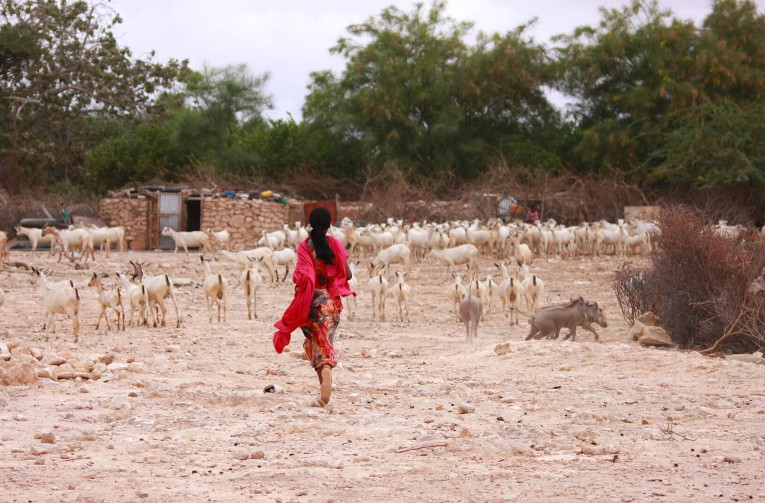
In the intricate tapestry of backyard ecosystems, an often underestimated yet crucial factor is water retention. From arid deserts to lush rainforests, understanding and enhancing water retention can profoundly influence ecosystem restoration efforts, and it need not be complex. However, arid climates do tend to be the most problematic in terms of ecosystem resilience today. In locales grappling with water scarcity – such as the arid landscapes of Africa, the Middle East, Asia and Australia, the western coastline of South Africa, the American Southwest and now vast areas in Europe – effective water retention is a lifeline. But how do we tackle this international environmental crisis when we can’t even fix these problems at home? The good news is that there are answers and they are achievable without having to study a science and agriculture degree. It’s called ecosystem restoration, and that can be done at ALL scales. The key to success is, of course, having an understanding of the problem and then the knowledge of how it’s done. So let’s start here…

Image credit: FAO
Why is water scarcity increasing?
Most people know by now that ongoing ecosystem degradation due to lack of water is negatively impacting carbon sequestration, dust emissions, and water cycles which is contributing to loss of biodiversity, agriculture, human health, and land degradation feedback loops. The land degradation feedback loop is a constant cycle of declining precipitation, which leads to the lack of vegetation, resulting in increased soil erosion. This in turn increases loss of soil nutrients that leads to more loss in vegetation cover. The result? Decreased evapotranspiration which closes the loop with more loss in precipitation.

An example of the water cycle. When precipitation occurs, water flow is dependent on soil porosity, ground cover, compaction, and slope. Water runs off and away from the initial rainfall location if the soil is dry and hard (compaction) and if the slope is downhill. Image credit: Chandel, A. (2024). Satellite-Based Remote Sensing Approaches for Estimating Evapotranspiration from Agricultural Systems

Google Earth aerial view of Prescott, Arizona 2024. An example of an arid climate and severe land degradation.
Taking action to reverse these conditions
Planting a variety of arid, endemic species of vegetation to break up the soil’s dense, nonporous top layer helps to reverse the soil condition, creating some breathing room, so to speak. The soil, much like plants, requires oxygen and a network of tiny channels to facilitate water movement. Introducing plants with strong taproots becomes a strategic starting point, as they can penetrate the soil at lower depths – creating space for additional plant growth – and can access deeper water tables that shallow plant roots cannot. Plants with taproots also provide extra stability via their longer and stronger root systems that hold onto the soil in adverse weather conditions, protecting it against erosion. This approach enhances the effectiveness of water penetration, allowing stored water to replenish existing vegetation. Consequently, this enables plants and trees to undergo evapotranspiration, releasing water vapor back into the atmosphere where it becomes part of the hydrologic cycle.

Here, endemic and drought-tolerant plants thrive together thanks to ground cover methods using small rocks and pebbles. This keeps soil cool, allows water to reach the plant’s roots, and prevents evaporation in hot weather. The water cycles through the plants, returning to the atmosphere for the next round of precipitation. Image credit: www.epa.gov
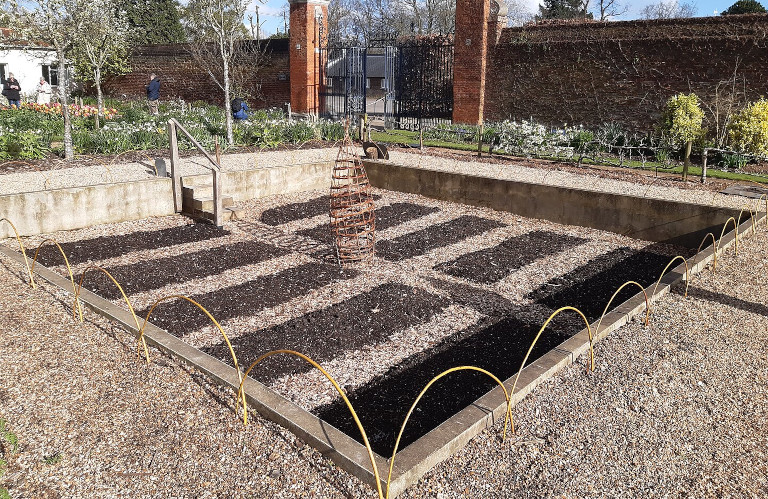
Sunken beds are a great strategy for planting and water retention in dry landscapes and are especially efficient in back yards. By creating this type of design, you can fill these holes with compost and larger debris that will help feed the soil as it decomposes and adds extra space for water to percolate. The dips in the beds will catch excess water, allow it to stay around longer and seep into the soil. This will eventually lead to more water reaching the water table. And don’t forget about covering that bare soil with ground cover to avoid evaporation. By Chiswick Chap – Own work, CC BY-SA 4.0, https://commons.wikimedia.org/w/index.php?curid=146986190
We are not only stewards of our own back yards but stewards of the planet as well. You may not think that making small changes where you live has larger impacts in the region, but it absolutely does. Think about it this way, if your neighbors see the positive impact that you have created by simple actions, they will be more inspired to try these techniques too. Maybe they see that your ground has turned greener, maybe they notice that you have more birds visiting and more bees and butterflies dropping by. Maybe they see that you are able to harness the very little water that does fall in your region. Once more people in your community start acting in unison, that’s when we see beautiful change unfold, and start feeling the effects of a cooler climate, more precipitation, and more success in growing plants and food. People around the world are starting to experiment with large-scale restoration plans that include greening the deserts, regreening desertified plateaus and the sparse arid regions that have been previously dubbed as inhabitable, so why don’t you give it a try at home? What’s to lose at this point?
Every single human holds the potential to make a global impact. But we need to have the knowledge. And that’s why we are here! Ecosystem Restoration Communities support restoration around the world, in all climates, and of all sizes. Come along for the ride and get dirty for the planet with us. Together we can create a more resilient world.

Planting date palms at ERC Habiba Community, Egypt



But you got to get rid of the goats and sheep, otherwise nothing will get a chance to grow – nothing – the carnivorous desire to eat these creatures is the curse of regeneration.
On the larger scale in rural environments – sure, but in my 1 acre back yard in SW Australia, planted as a 'bush' garden by the previous owners, I have wide spaces of bare soil baking now in our current temperatures of 35 deg C and higher, low humidity and no precipitation. There is no roof water capture – yet – and I have to rely on town piped water at some expense to keep a few special plants alive. I found this article giving me a lot of thought as to what I can possibly do. The upside to a bush garden are the many birds and big kangaroos rest in the heat of the day under some of the bushes, which drives my poor dog wild.
I hope you've checked out 'wicking planters' to help grow edible plants in your situation.
I have read some information but it has tended to be of the I-want-to-sell-you-some-stuff variety. I shall take a deeper dive – thank you for the heads up.
This has been the major focus of my work for the last15 years. Other terms are water harvesting, water retention, erosion control, soil rebuilding and regeneration, soil flocculation, microbial inoculation, humic acid flushing, cover cropping, creating green manure, drought-tolerant reforestation, composting, mulching, creating bird and small mammal habitat.
To do this effectively, we must study the long-known principles of permaculture, soil microbiology, ecological comprehension of slope, exposure, soil typing, meteorological/climatological histories and tendencies, soil nutrient requirements, shading, berming and swaling, no-or-low tech processes and procedures for re-wilding or Mayan milpa multiple-use forestry. Seed collection and starting and planting shoots of existing vegetation are low-cost methods to get started.
The biggest input is your personal and communal desire and respect for the crucial value of Nature and your incredibly hard, physical and emotional work that is needed to make this go in arid or semi-arid lands. It is possible to make small areas viable for plant growth with simple strategies using existing resources around you, or using a minimum of engineered technological products and tools to assist you.
Dirt is just healthy soil waiting the return of energetic inputs. Direct solar input must be modified to increase productivity while limiting water loss. Dirt becomes soil with the inoculation of soil microbes and humic acids to feed them, followed by flocculation with organic substances such as compost teas, vitamin B12, fish emulsion, etc. When planting, working the dirt and amending it with composted carbon products, increasing tilth via sand, gravel, some wood chips, volcanic materials like perlite and others, using organic water storing products, proper plants and planting techniques, heavy composting and mulching, and a reliable irrigation technique that may be manual labor watering, drip irrigation, grey water usage, physical shading using shade cloth or bamboo screens, etc., and organic fertilization at intelligent intervals will result in a new localized environment. A 2 in. (5 cm.) layer of compost and/or mulch can reduce the surface temp. of that area by 20-40 degrees F. A four-inch layer is much better, and will retain any moisture placed beneath it. Rain/snow or spray water will both percolate into and swell up these groundcovers, and aid in heat reduction and water retention. Even small berms around trees and shrubs can harvest precipitation, but mulch inside and over them.
Now, pick your locations carefully, using favorable slope and exposure, and begin to create islands of water harvesting green that are no more than 50-100 ft (16-32 m) apart. The size of these planted areas should be scaled to the larger areas available for modification. Permaculture says to start closest to where you physically live, and work outward. I like to take a feature of the landform within a ten minute walk of available tools, materials, machines and water sources, and then evaluate that land to scope out how/where to begin in an area that might be no larger than 625 sq. ft. (65 sq. m). It can be smaller. Visualize what the larger land form would look like if each regenerated plot was no more than 50 ft. apart. You can use a simple string, stake and tape measure to demark the plot(s). It may be necessary to screen plants to protect from depredation by hungry animals, so I often plant a shadow garden outside this area for them to eat what they need. But still protect your plantings as best you can.
I like to bring in birds to these areas because they are so ecologically helpful. A water tray and several feeders will attract many. Black sunflower seed is the overall best, and other seed is available to nurture that diet. Keep the water basin full and clean. Use older water in basins to water the planted shrubs/trees.
Once you have some small plots going, imagine what one shade tree would do centered between each plot, and then practice due diligence and visualize a milpa environment of tall shade, perennial understory and food/herb/forb gardens nestled alongside and beneath these trees. Even if no plant material exists between plots, attempt to compost/mulch it at least 4 inches deep, and net it with jute to keep it in place and resist erosion. If we want to live long enough to re-capture our dignity as biotic beings, make this process the rest of your life's work, with sleep and personal health/support blended inside it.
Enjoy and feel healthy, and love what you are doing. All other biota will acknowledge you, and than you.