

(Conversation recorded on January 10th, 2023)
Show Summary
Today, Nate is joined by social psychologist Jonathan Haidt. Professor Haidt is one of the leaders in the understanding of human biases and predispositions, and how they affect cooperation, communication, and change-making. Human psychology and behavior is at the root of the larger predicament that humanity faces. Is it possible to use a better understanding of our own psychology to change our behavior and the behavior of future generations? Is social media hijacking the vulnerabilities of our social-psychological nature? How can we redesign systems technologies and systems to bring out the better sides of our natures, instead of amplifying the worst?
About Jonathan Haidt
Jonathan Haidt is a social psychologist at New York University’s Stern School of Business. He received his Ph.D. from the University of Pennsylvania in 1992. Haidt’s research examines the intuitive foundations of morality, and how morality varies across cultural and political divisions. Haidt is the author of The Happiness Hypothesis (2006) and of The New York Times bestsellers The Righteous Mind (2012) and The Coddling of the American Mind (2018, with Greg Lukianoff). In 2019 he was inducted into the American Academy of Arts and Sciences. Since 2018 he has been studying the contributions of social media to the decline of teen mental health and the rise of political dysfunction. He is currently writing two books: Kids In Space: Why teen mental health is collapsing, and Life After Babel: Adapting to a world we can no longer share.
To watch this video episode on Youtube → https://youtu.be/IB4lGwxysEk
Show Notes and Links to learn more:
00:20 – Jonathan Haidt Works, Info, Books
01:07 – Robert Sapolsky, E.O. Wilson
02:10 – David Sloan Wilson + TGS Podcast
03:25 – The Happiness Hypothesis
03:39 – The Ancients
03:45 – Cognitive Behavioral Therapy
03:50 – Hamlet scene
05:22 – Limbic System and Neo-cortex
07:02 – The Hobbit, Ishmael
07:10 – The Righteous Mind
07:28 – Moral Psychology – Cognitive Development (Lawrence Colberg)
07:50 – Richard Shweder
08:02 – Alan Fiske
08:30 – Most social scientists are left leaning
09:07 – National Review, Thomas Sowell, Friedrich Hayek
09:36 – John Staurt Mill
11:23 – Group Selection
12:10 – The Coddling of the American Mind
14:53 – Millennials, Gen Z
15:10 – Gen Z twice the rate of mental illness than millennials
15:43 – How Trigger Warnings Are Hurting Mental Health on Campus – The Atlantic
16:05 – Life After Babel – Why the Past 10 Years of American Life Have Been Uniquely Stupid – The Atlantic
18:02 – Don Peck, Jeff Goldberg
19:45 – Huge spikes in mental health rates between 2012 and 2013 – especially for girls
20:48 – Kids in Space: Why Teen Mental Health is Collapsing
22:14 – Jonathanhaidt.com/socialmedia
23:20 – PISA Study
24:45 – Timeline of social media development, teen adoption curve
28:29 – Hamline University Incident
29:18 – Schools that have banned Mark Twain, To Kill a Mockingbird
30:46 – Rewilding
31:10 – Nature is inherently unequal
31:58 – Jean Jacques Rousseau – idea that humans are malleable
32:27 – Daniel Schmachtenberger + TGS Series
33:58 – Ibn Khaldun
38:31 – Odes from Ovid
40:13 – Francis Haugen Whistleblower
40:13 – Mark Zuckerberg has complete control over Facebook
40:49 – Tristan Harris + TGS Episode
42:15 – Consilience E.O. Wilson
44:51 – Ilya Prigogine
45:30 – Postmodernism
48:48 – Social Media Amplifies the loudest in the room
50:20 – Call-out/cancel culture
54:08 – More extreme candidates from the two parties being elected
55:48 – Representatives disincentivized from cooperating with the other side
57:15 – Anonymity with identity-authentication techniques
58:45 – Social Media Structural reforms that aren’t content monitoring
59:49 – Gen-Alpha
1:01:30 – Collective Action Problem
1:06:52 – Both-Sidesism
1:08:49 – Dynamism and Decency
1:09:10 – Ronald Reagan, Margaret Thatcher
1:11:13 – Sociocentric vs individualistic societies
1:11:30 – Joseph Henrich – The WEIRDest People in the World
1:12:35 – Sosis – 19th Century Intentional Communities, those with lots of sacrifice lasted longer
1:15:12 – Evernote
1:16:30 – Steven Pinker
1:17:32 – Joseph Campbell – Hero’s Journey
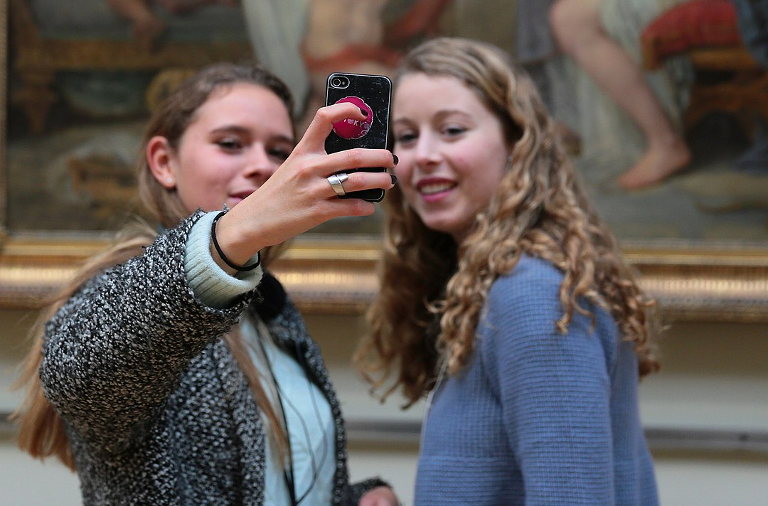
Teaser photo credit: (Ed. note: Photo of members of Gen Z). Two young women taking a selfie at the Palais des Beaux-Arts in Lille, France (2016). By User:PBA Lille © Palais des Beaux-Arts, Photo J.M.Dautel. – PBA LILLE, CC BY-SA 4.0, https://commons.wikimedia.org/w/index.php?curid=51201934



Comments