

We live in an age of convenience. Anything that makes our complicated lives less complicated and less difficult to navigate seems like a boon. And in the digital age—which allows us access to so much information anywhere, anytime—the lure of convenient access is very strong.
On the surface it seems sensible, for instance, to make it possible to log in to just one account for all our government services and interactions instead of having to use separate apps or an account for each service or department. And this would make sense if not for the immense dangers of concentrating such information and therefore making it an irresistible target for hackers. It’s also worth considering who might be among those hackers, for example, unfriendly nations and their militaries.
But that is what the British government is proposing for the British public through the government’s digital governance initiatives. You probably don’t need a long litany of data breaches including those involving governments to confirm your fears. But this article describes recent ones in Britain in the context of the government’s determination to roll out a national digital ID system.
It’s important to recall that with the advent of the Trump Administration, it is no longer necessary for government systems to be hacked from the outside. These systems can now be freely raided under the direction of the leader of a country by tech workers parading as government employees and the information shipped anywhere for later use and profit. We do not know for certain that this has happened. But that is just the point. It is currently impossible for us to know one way or another.
In my recent piece “Are computers and democracy compatible? Maybe not” I noted that even if Donald Trump had not won the presidency, all the personal information the U.S. government stores on its citizens would still be just as vulnerable as we are now finding out. Although a Harris administration would probably have scrupulously respected federal privacy laws, any future administration could do what the Trump administration has done (assuming there are no new barriers put in the way of accessing that data).
There is also the additional danger posed by a unified digital ID/login system entirely dependent a continuously functioning electrical grid. When the grid goes down, everything dependent on that ID/login cannot be accessed. Think: airline reservation systems which bring an airline to a halt until the system comes back up.
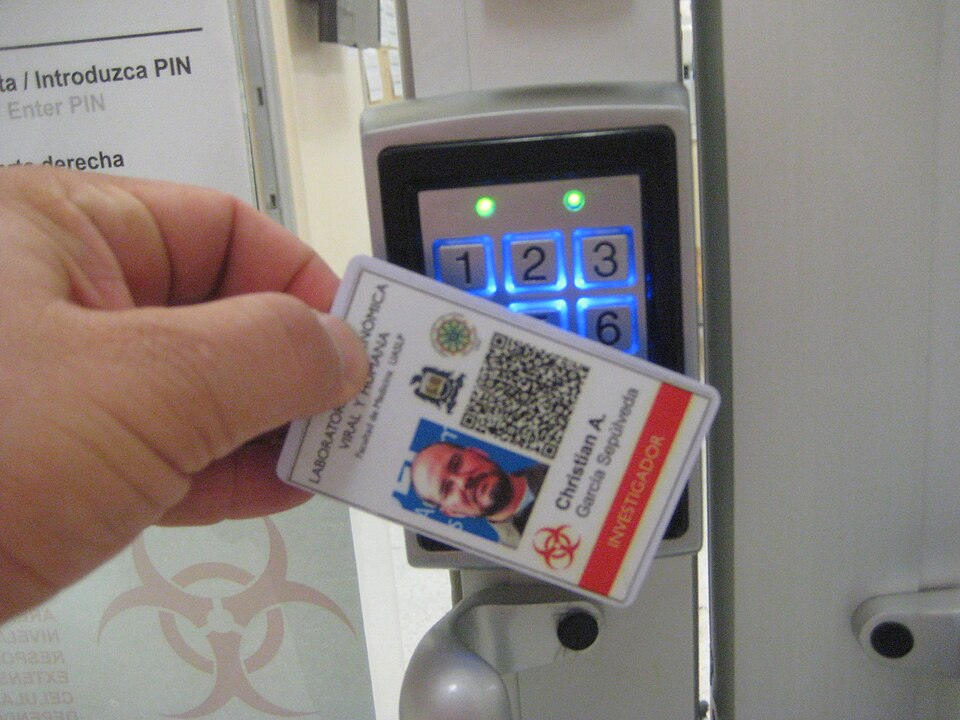
How quaint it must seem to our tech overlords when someone verifies a person’s identify by looking at a picture ID. How quaint it must seem when someone pays for something using currency. Given the fragility of our data networks and electrical system, it seems like it would be wise to have alternative ways of conducting daily life when those systems go down or just malfunction. Maintaining those alternative ways will seem inefficient until a major digital system goes down for a prolonged period.
Finally, there is the danger that those living under a digital system for accessing services may find themselves inadvertently or intentionally locked out. If intentionally, it might be for reasons that are justified or not. But it will be all too easy to cut someone off and much harder to address an unjustified cutoff. Meanwhile, the person needing assistance, perhaps urgent assistance, will be without help. Will there be a backup up system such as a physical ID when the inevitable happens and procedures to allow someone at an office in person to move forward with accessing the help needed?



Comments
This kinda leaves out the possibility that whoever controls the government/AI corporation will have access to a trove of information on each of us in one place: our Social Security number and all the data from our SS accounts, which the Muskrats just scraped from the SS building; all our tax info from the IRS HQ; drivers license info, criminal history, credit info and probably banking and medical info, everything from our social media accounts, and via our cellphone, our location at any moment and who we've been talking to. Seems to me THIS is why they need all those data centers, for the massive amount of energy and space to store this enormous amount of data. Not that anyone is looking at it necessarily–just if anyone becomes a problem for Our Lords and Masters, they can find something to use for blackmail (likely this is a key reason why governments and media have been SO compliant with the Zionist state even as it commits a blatant genocide–that was Jeff Epstein's job for Mossad, inveigling powerful men into compromising dalliances with underage girls, capturing it on hidden cameras, then you have something to hold over that guy). But we already have drones, some equipped with weapons–so if blackmail doesn't work (some of us actually do have nothing to hide–notably Epstein's gig wasn't very effective on women), anyone who becomes too troublesome can simply be eliminated. Our tax dollars, our natural resources, our labor are all being poured into the schemes of criminally insane men–Musk is ready to vampirize the life out of the Earth to fund his imaginary, ridiculous Mars gambit, and has said that maybe the purpose of humans is to create the superior artificial race that will supplant us. Perhaps some of the others are less delusional, but they think they must win the AI race at all costs–costs to be paid by the 99% and by the rest of the living world. It doesn't look like anyone has an idea how to stop these madmen, so we've come to the point where the collapse of civilization is not the worst case scenario but our best hope
Chilling. Between the likelihood of malevolent abuse and the likelihood of crash by incompetence, the likelihood of catestrophic failure seems a virtual certainty. How does a person even opt out? (We can't!)
This is a new feudalism. The enclosure movement has come full circle, back to a form of serfdom, but without even access to a small commons for subsistence.
AS IF there aren't any bad people, in high places, who would misuse this capability, who would hurt people, within the government!
We have arrived at a situation in which well-meaning people are both filtered out of leadership
and are so repulsed by the dominant system that no opposition can exist. Us anti-authoritarians are persecuted for attempting to protest and discuss vast substantive injustices because it may undermine our maladaptive and doomed economy. And the monitoring of personal activity has become so oppressive that comments such as this are used by my employer to threaten my job. I work in a medical lab where our tasks are science based and confidential, so I cannot comprehend how my political opinions can affect my work. But they say I am curbed from personal expression, critique and protest under the terms of employment. I am default required to provide access to personal devices not compensated by the corporation. Even having a "burner phone" is grounds for termination. I expect Patti has faced similar dilemmas. TINA (Thatcher 1980) has progressed way beyond defending Empire. It's invaded our minds. Power is asymmetrical so that even a false accusation becomes a final judgment, with no recourse.