

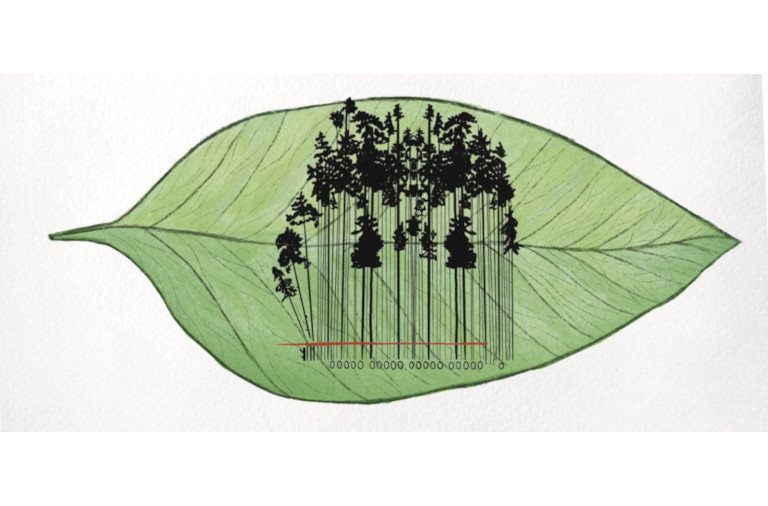
On 10 February, representatives of 14 bioeconomy organisations from 11 EU Member States signed a Memorandum of Understanding (MoU) officially establishing the European Bioeconomy Cluster Alliance (EBCA). The agreement is an important step towards fostering collaboration and innovation in the bioeconomy sector. In Spain, regions such as the Basque Country and Catalonia, in particular, are strongly committed to the transition towards a bioeconomy model. The bioeconomy has emerged in recent decades as a transformative proposal for our economic system aimed at achieving climate neutrality and moving away from the use of fossil fuels, cement and other materials, such as plastics.
What does bioeconomy refer to in this context? For the European Commission, the bioeconomy encompasses the production of renewable biological resources and the conversion of these resources and waste streams into value-added products such as food, feed, bio-based products and bioenergy (Ronzon & M’Barek, 2018). Such a model promises to protect the environment, achieve climate neutrality, avoid overexploitation of natural resources and enhance biodiversity while boosting the economy by creating jobs and wealth (European Commission, 2018). Thus, the bioeconomy according to its promoters aspires to save the planet without having to give up our current economic model.
But one might ask: is it possible to reconcile all these objectives, and can the bioeconomy be a driver of both environmental conservation and material wealth? These questions are not unique to the bioeconomy, but are very similar to those that arise when talking about other concepts that aspire to solve the apparent dilemmas between economy and ecology, such as sustainable development, green growth or the circular economy. Our (typically scientific) answer is: It depends on the exact definition of the bioeconomy.
Is the bioeconomy beneficial or detrimental to the climate and the planet?
Replacing the use of unsustainable materials with biomaterials can and should be one of the paths to carbon neutrality, especially in the short term. The production of materials from plant biomass emits the same amount of carbon dioxide (CO2) into the atmosphere (respiration) as is synthesised through photosynthesis. This results in a zero balance, also called a zero carbon footprint. And forestry is one of the sectors expected to contribute to the generation of these biomaterials (CORDIS, 2017; Verkerk, 2022).
The carbon sequestered in wood can be used to produce long-lived materials (e.g. beams and panels for furniture or building materials), which can help fix carbon in the long term and thus help mitigate climate change. However, most of the planted biomass is and will continue to be used to produce biomaterials with a much shorter lifetime (which means a short lifetime of benefit in terms of emission reductions), such as bioenergy, paper, resins, adhesives, paints, multipurpose foams (acoustic insulation, packaging, etc.) or nanocellulose for microplastics (European Commission, 2011). In addition, there is an emerging industry of innovative forest biomass-based products in different stages of development.
The synthesis of these bioproducts would also generate different environmental problems. On the one hand, a huge carbon footprint, as their production requires energy and the distance between the place of production and the place of consumption is increasing. On the other hand, a huge environmental impact, as a high demand for products in the short term can only be achieved by increasing the area devoted to tree plantations, in many cases replacing already scarce areas of native forests, and implementing very aggressive silvicultural practices with negative effects on carbon sink conservation, soil erosion, forest health and resilience (Curiel Yuste et al., 2023). Even if we can adapt silvicultural practices to improve productivity, natural resources are far from infinite (Richardson et al., 2023) and can hardly replace all current production based on fossil fuels and cement.
Moreover, we should not forget that greater efficiency in forestry practices can lead to greater absolute demand, offsetting any reductions in environmental pressures achieved, as warned by the Jevons paradox observed in other areas such as water management (Dumont et al., 2013; Sears et al., 2018) or domestic heating (Sorrell, 2009). This, added to the fact that the development of the bioeconomy will not necessarily lead to a reduction in fossil fuel consumption (Ayres, 2007), suggests a very uncertain and bleak future for climate and forests in a bioeconomy scenario.
How to achieve a truly sustainable bioeconomy model that is beneficial for the climate and the biosphere?
All of the above would seem to indicate that conserving natural ecosystems in the long term would require moderating our expectations of biomass production as a substitute for other materials. However, this moderation clashes with the prevailing logic of an economic system whose imperative is wealth accumulation, and in which environmental (or social) gains are (when they occur) mere co-benefits, never necessary conditions. Thus, a bioeconomy that is driven by this logic runs the risk of having counterproductive effects on the climate and ecosystems.
How, then, to achieve a truly sustainable bioeconomic model? We propose to go back to the root of the term bioeconomics, which was first proposed by Nicholas Georgescu-Roegen, renowned mathematician and economist best known for his work The Law of Entropy and the Economic Process (1971). This new concept born at the junction of biology, physics and economics demonstrated the thermodynamic unsustainability of perpetual growth and laid the foundations of the discipline of ecological economics.
Inspired by that proposal, transformative economic paradigms that consider the biophysical limits of economic development and put life before wealth accumulation (Ayres et al., 2001) have emerged in recent decades, such as the wellbeing economy (Fioramonti et al., 2022), the Doughnut economy (Raworth, 2017) or degrowth (Kallis et al., 2025). The bioeconomy in its original sense requires more than the substitution of the origin of materials-from fossil to renewable-if not a complete redefinition of the role and scale of the economy within the biosphere.
But these transformations of the economy will be impossible without a democratization of the decision-making process in the economic sphere. We argue that, in the face of a model such as the current one, which is geared towards making profits for a small proportion of the population (Hickel & Sullivan, 2023), democratising decisions on the production and management of common goods, such as forests, would guarantee a sufficient supply of resources to ensure the well-being of all people within planetary boundaries (Steinberger et al., 2024).
Proposals advocating a democratization of the economic sphere of life must therefore be central to the bioeconomy proposal. It is also crucial to recover its original definition and thus avoid its distortion into another, albeit greener, utilitarian framework. We argue that these conditions must be met for the bioeconomy model to make a meaningful contribution to an ecological society, otherwise it risks reproducing the very problems it aspired to solve.

LureNature.
[Note: Updated on 2025-04-12 to correct a couple of references.]
References:
- Ayres, R. U. (2007). “On the practical limits to substitution”. Ecological Economics, 61(1), 115–128. https://doi.org/10.1016/j.ecolecon.2006.02.011
- Ayres, R. U., Gowdy, J. M., & Van Den Bergh, J. C. J. M. (2001). “Strong versus weak sustainability: Economics, natural sciences and consilience”. Environmental Ethics: An Interdisciplinary Journal Dedicated to the Philosophical Aspects of Environment, 23(1), 155–168.
- CORDIS. (2017). Los bioplásticos: Materiales sostenibles para construir una bioeconomía circular sólida en Europa. CORDIS | European Commission. https://cordis.europa.eu/article/id/400694-sustainable-materials-for-a-strong-and-circular-european-bio-economy/es
- Dumont, A., Mayor, B., & López-Gunn, E. (2013). “Is the Rebound Effect or Jevons Paradox a Useful Concept for better Management of Water Resources? Insights from the Irrigation Modernisation Process in Spain”. Aquatic Procedia, 1, 64–76. https://doi.org/10.1016/j.aqpro.2013.07.006
- European Commission. (2011). Forestry in the EU and the world: A statistical portrait. Publications Office. https://data.europa.eu/doi/10.2785/13022
- European Commission. (2018). Una nueva Estrategia en materia de bioeconomía para una Europa sostenible [Text]. European Commission – European Commission. https://ec.europa.eu/commission/presscorner/detail/es/ip_18_6067
- Fioramonti, L., Coscieme, L., Costanza, R., Kubiszewski, I., Trebeck, K., Wallis, S., Roberts, D., Mortensen, L. F., Pickett, K. E., Wilkinson, R., Ragnarsdottír, K. V., McGlade, J., Lovins, H., & De Vogli, R. (2022). “Wellbeing economy: An effective paradigm to mainstream post-growth policies?” Ecological Economics, 192, 107261. https://doi.org/10.1016/j.ecolecon.2021.107261
- Hickel, J., & Sullivan, D. (2023). “Capitalism, Global Poverty, and the Case for Democratic Socialism”. Monthly Review, 99–113. https://doi.org/10.14452/MR-075-03-2023-07_7
- Kallis, G., Hickel, J., O’Neill, D. W., Jackson, T., Victor, P. A., Raworth, K., Schor, J. B., Steinberger, J. K., & Ürge-Vorsatz, D. (2025). “Post-growth: The science of wellbeing within planetary boundaries”. The Lancet Planetary Health, 9(1), e62–e78. https://doi.org/10.1016/S2542-5196(24)00310-3
- Moreaux, C., Oti, F. S. M., Yuste, J. C., Izquierdo, L. P., & Valero, M. E. (2023, November 23). “Por qué la bioeconomía debería tener en cuenta la conservación del suelo forestal”. The Conversation. http://theconversation.com/por-que-la-bioeconomia-deberia-tener-en-cuenta-la-conservacion-del-suelo-forestal-216272
- Raworth, K. (2017). “A Doughnut for the Anthropocene: Humanity’s compass in the 21st century”. The Lancet Planetary Health, 1(2), e48–e49. https://doi.org/10.1016/S2542-5196(17)30028-1
- Richardson, K., Steffen, W., Lucht, W., Bendtsen, J., Cornell, S. E., Donges, J. F., Drüke, M., Fetzer, I., Bala, G., von Bloh, W., Feulner, G., Fiedler, S., Gerten, D., Gleeson, T., Hofmann, M., Huiskamp, W., Kummu, M., Mohan, C., Nogués-Bravo, D., … Rockström, J. (2023). “Earth beyond six of nine planetary boundaries”. Science Advances, 9(37), eadh2458. https://doi.org/10.1126/sciadv.adh2458
- Ronzon, T., & M’Barek, R. (2018). “Socioeconomic Indicators to Monitor the EU’s Bioeconomy in Transition”. Sustainability, 10(6), Article 6. https://doi.org/10.3390/su10061745
- Sears, L., Caparelli, J., Lee, C., Pan, D., Strandberg, G., Vuu, L., & Lin Lawell, C.-Y. C. (2018). “Jevons’ Paradox and Efficient Irrigation Technology”. Sustainability, 10(5), Article 5. https://doi.org/10.3390/su10051590
- Sorrell, S. (2009). “Jevons’ Paradox revisited: The evidence for backfire from improved energy efficiency”. Energy Policy, 37(4), 1456–1469. https://doi.org/10.1016/j.enpol.2008.12.003
- Steinberger, J., Guerin, G., Hofferberth, E., & Pirgmaier, E. (2024). “Democratizing provisioning systems: A prerequisite for living well within limits”. Sustainability: Science, Practice and Policy, 20(1), 2401186. https://doi.org/10.1080/15487733.2024.2401186
- Verkerk, P. J. (2022). Forest products in the global bioeconomy. FAO; https://openknowledge.fao.org/handle/20.500.14283/cb7274en
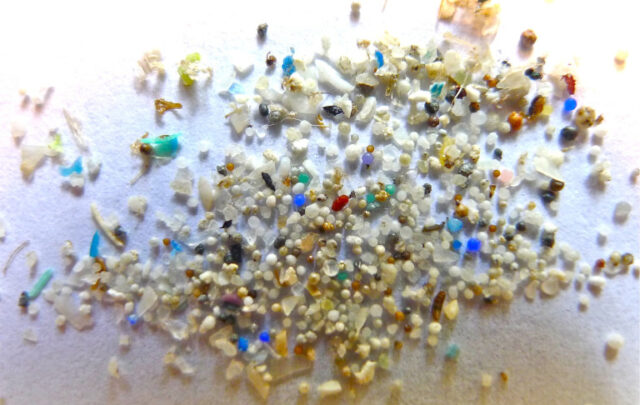
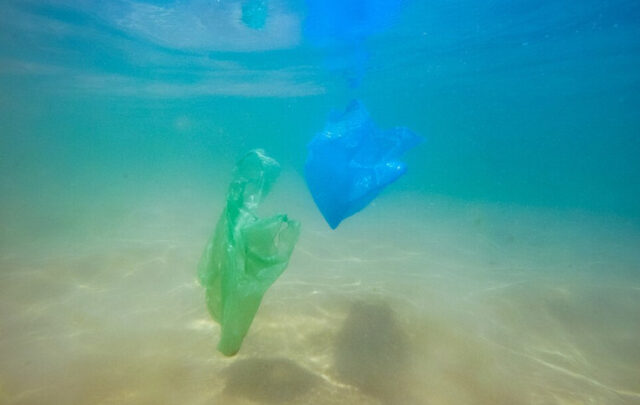
In other words, whether bioeconomics, or any other proposed "green" economic model can actually help with climate change and other environmental emergencies, depends on whether the innovation is accompanied by an acceptance of LIMITS. There is no technology or system that will allow us to have our cake and eat it too–to rescue ecosystems without changing socioeconomic relations or the lifestyles of the richest global 25%.
And the business system and profit motive cannot survive in an environment with limits.
Right now the distribution of money and debt will not permit alternatives.
A good example is plastic container and package recycling; they allow you to sort your trash
and pretend you're saving the planet, but it's like voting; It wouldn't be allowed if it changed anything. So it's nice playing these head games, but it ain't going anywhere. There's too much day dreaming lately.
I guess worker cooperatives could strike some sort of balance between socialism and capitalism which retains the benefits of both.
The only sustainable economy is a bioeconomy. But as Mary notes above, human use of primary biological production must be limited so that it doesn't destabilize the ecosphere. This limit, called carrying capacity, is directly linked to the size of the human population and how much each person consumes.
If we look at the population and consumption patterns of humans when they were living almost entirely in a bioeconomy, the pre-metal-age world, world population was only a few tens of millions, jumping to over 100 million during the bronze age. Metal tools greatly magnify the power humans have over the biological world and allow better reproductive success.
These historical population numbers are an indication of what size bioeconomy is truly sustainable (during a mild Holocene climate) and also of how dramatic human population overshoot has become. Even if we accept bronze age technology as environmentally benign, population would have to be reduced by 99% to become sustainable (by returning below carrying capacity).
The fact of limited carrying capacity and our overshooting that capacity means that a dramatic reduction in the scale of the human enterprise is inevitable. We don't know when it will happen but I suspect it will be this century, even without a nuclear war. A big human dieoff is coming, but just about everyone pays no attention.
The population of some countries (EX; South Korea and Japan) are decreasing so no need for your dystopian mass population control idea.
People keep saying genocide is inevitable, but we have to begin where we are.
If fast population reduction is what you recommend then you should volunteer
to reduce it. Who says democracy leads to fairness? All us Americans who voted November 2024, look what we got. And the Fascists seem to be requiring alternative facts in education/information.
It would be easier, more effective and more humane to reduce wasteful consumption.
An article in Nature reports that 2/3 of climate change is attributable to the top 10% wealthiest.
https://www.nature.com/articles/s41558-025-02325-x
But what if curbing excess is no longer enough?
And how much is Enough?
Economically, we seem hurtling headlong into maximal concentration, and maximal deprivation.
I said on another blog that when law becomes a “Triumph of the Swill” it’s too late.
Does Genocide have any message for comfortable Americans,
or will it remain a spectacle? Such segregation is not maintainable.
The seams are unraveling.
Based on this article, bioeconomics sounds like just another "green" version of modernity. There is no such thing as "green". Read the work of Vanessa Machado de Oliveira Andreotti and her Gesturing Towards Decolonial Futures collective. Any "green" version of modernity simply puts modernity on life support, extending its lifespan while failing to nurture the gestation of something entirely new.
Let the great unraveling proceed.
I agree, but the motivation for "green" transitions, ecomodernism, degrowth, and other similar policies is simply to keep 8.3 billion people alive, especially the fraction that live as moderns. Since the alternative is horrific, no one wants to hear that it can't be done. So the grasping at straws continues and the years go by, bringing us ever closer to dieoff.