

It’s that time of year when the old women are cleaning out the attic, metaphorically, if not actually. I’ve been doing both. I’ve been thinking a great deal about what is no longer philosophically useful in my life and jettisoning those ideas. (Mostly in response to the new regime…) But I have also been actually rooting around in the storage spaces of this house, boxing up the stuff that I think other people can use, perhaps that other people might be inclined to buy. In this process I have been repeatedly banging my head against the extreme difficulty of getting rid of stuff, of responsibly removing what is waste in this house without turning it into Waste in the outside world. It is not so easy to find places to take what you are no longer using, never mind stuff that isn’t usable. And sometimes it feels like an impossible task. Especially when I pay attention to the words and actions of others… That guy just tossed out a whole refrigerator… do I really have to agonize over the disposal of this raggedy old sock? (HINT: Yes… because it’s not just one sock, is it…)
We have this whole monstrous edifice of messaging telling us to just toss what we don’t want. Someone else will use that sock that has no heel left to darn. Someone else will clean up this toaster and make it work again. Someone else will recycle the mountain of plastic that comes through the door with every load of groceries. Or… nobody will be affected by this toxic mess. Don’t worry. We’ll dump it where it won’t bother anyone… as if there are such places in the world even if you limit “anyone” to “human”. And thus so enculturated and acclimated to easy disposal, we are continually surprised at how hard it is to donate our excess and dispose of our trash.
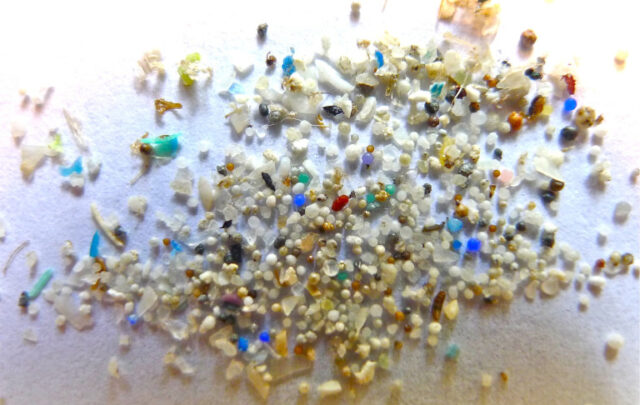
But of course, nobody wants your trash! Certainly, no other human wants to be exposed to your leaking batteries and poisonous petrochemicals and the toxic metals in old electronics. But even those whose business model is to resell donated stuff do not want your waste. (Nobody wants to touch your socks…) They want stuff that won’t cost too much to return it to desirable shape and that will leave their shelves quickly. They don’t want piles of stuff they have to warehouse. They don’t want to be your attic. They want to sell stuff. That broken toaster is going to cost them dearly, and, once rejuvenated, it will sit for months before someone decides they need a toaster. But at least the toaster can be used by someone (as long as it can be used…)
Then there are all the things that are simply not ever going to leave their shelves because nobody wants them at all, used or new. Books, unfortunately, tend to pile up in resale shops. And those crates of vinyl records or CDs or DVDs that you have, as well as the outdated electronica that play these things, these are all unwanted. You might find a record store with a taste for vintage, but they aren’t looking for used albums. The thing that will sell is the record that has never been opened. Granted, the record is more likely to play that way, but it’s also more valuable in our market of purity. This is a culture where something that has never been touched is worth much more than a used thing, no matter how gently it’s been treated.
So most of what you are trying to get rid of is unwanted. After all, there are reasons you don’t want it… are you really surprised that nobody else does either?
In any case, it is very hard to get rid of excess. Cleaning house is a tangible — and annoying — reminder that it is much better all around to not acquire things that will become useless. Except our whole socioeconomic system is built on the churning of labor and resources into trash. It is needs us to constantly buy stuff. It needs us to buy useless stuff. It needs us to buy stuff that will be thrown out at the earliest opportunity. It needs us to throw away the old and buy new, now, even when the old is still functional. It so needs us to make trash so that we will buy new things that it has built dysfunction and disposability into every last thing. And it has made it very hard to dispose of anything responsibly — because that costs profits.
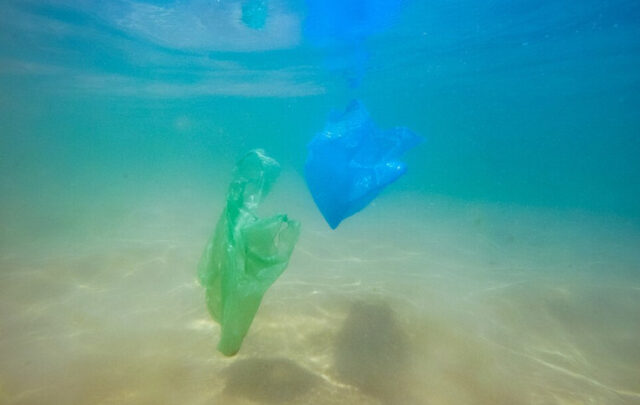
Most people don’t give those single-use plastic bottles or the planned obsolescence of our cell phones a single thought. It is easier just to go along with the system. But where this system makes things easy is where you need to tread most carefully. Those are the things that are causing the most harm — and, not unrelatedly, those are the things that are reaping the highest profits. Pay attention to those things that make the highest profits and know them for what they are — intentional waste. Because the only way to stop, or even mitigate, the harm being done to this planet is to stop supporting those things that cause harm. And the clearest path to stopping harm is to stop creating waste. This waste stream is the central pillar. Take care of your own waste, stop acquiring and therefore generating so much of it, and the whole system will collapse.
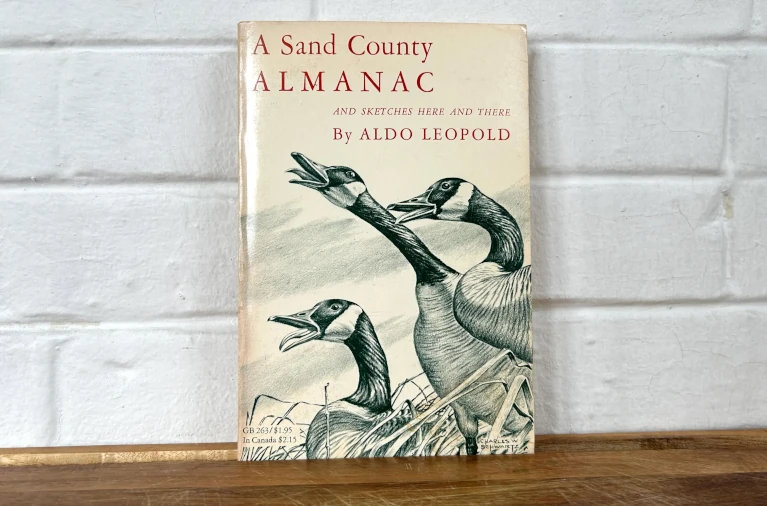
Many people talk about the idea of a land ethic. This idea of Aldo Leopold’s has cachet. It is a catchy phrase. It sounds good. It makes us feel good. But most people don’t seem to understand what behaving ethically toward the land actually means, nor even that having a system of ethics is behavior, not just philosophy. An ethical relationship to land is not romanticizing rural spaces or wildlife. It is not just living in season. It is not even just living local, though that gets closest to a true ethic of care for the world. An ethical manner of interacting with the more-than-human world, at a minimum, implies reducing the harm you do to the world.
Ethical treatment of the land is the same as ethical treatment of your children; and, in fact, the two are intertwined. You would not directly and intentionally harm your child, nor casually cause your child to suffer. Yet you do things that will cause your child suffering in the not so distant future and that are probably already causing at least emotional damage to your child right now. When you toss a plastic straw into the trash can, when you book a flight to a conference, when you buy a new cell phone every time Apple comes out with a new model, then you are causing harm — both to distant peoples and places that have to bear the current burden of your waste and to your child who will live in nearly unimaginable degradation because you engaged with this system and supported it by spending money on it. Because you acted unethically toward the land, and therefore your own family… because these are related entities, of course…
What ethics does not entail is what is commonly found in exhortations to act, because most of those exhortations are talking about activism, not the actions of daily life. Reducing harm does not involve protest or activism. It is not dependent on legislation. It is not anything that you believe in. Reducing harm simply means not causing harm. It means you stop destroying things and live with as little impact on your surroundings as you would on a wilderness camping trip. In fact, it largely precludes camping trips if that means traveling long distances and investing in a whole barrel of specialty equipment all mostly manufactured in harmful fashion from toxic materials. I think we can all agree that reducing harm means not causing stuff like that to happen or supporting its happening in any way.
But how is this done?
The most direct way to reduce harm is to not cause waste. And the most practicable way to not cause waste is to manage your own waste streams, to not offload the harm and degradation onto other peoples and places. These projects are mutually reinforcing. The more you take on your own mess, the less you are willing to engage with mess generation. Consider that phone you think you need to replace. If replacement is as simple as this economy makes it for you, by moving all the pain and difficulty elsewhere, then you will never give replacement a second thought. If you can dump it in a bin and have someone else cope with the toxic mess that is worn electronics, then you will likely do just that. In fact, this economy is counting on you to do just that. It is engineered to make that the easiest path. Don’t consider the waste. Just toss it.
However, if you want to live ethically, then you do not toss it because you know that there is no tossing that does not harm some body. And if you embrace a true ethic of care for the land, for the world, then you will not do that. You will do everything you can to extend the life of the thing that this socioeconomic system wants you to toss, and when it no longer works you will store its toxic hulk in your own home. You will not toss it elsewhere where its toxicity will fester and spread to other beings. You will take on that toxicity yourself and keep it contained.
Obviously, this has a tendency to reduce what you take into your life. If you know that you are going to be saddled with something that is useless and likely poisonous for the rest of your life, you are not going to buy that thing. You will not participate in planned obsolescence. You will buy what you need and make sure before you spend your money that this way of meeting your needs will last a long time and will not be toxic waste when it no longer functions.
You will find this very difficult…
That planned obsolescence, designing a thing to wear out in a short time — or worse, designing a thing that will no longer integrate with the larger system even though it still works just fine — is how this culture thrives. It sustains itself through the waste streams you generate. Every thing you replace is another sale. If you stop buying, then there is less profit. So everything about this socioeconomic system is designed, intentionally, to make waste as frictionless as possible for those who have money to spend, while making the harm that waste causes invisible to those spenders. This is intentional. Waste is intentional. Harm is intentional. Without wasteful harm there is no continuity of profit. It is no surprise that we do not understand the harm that we do. We are kept blinkered so that we continue to do it. Otherwise the horror would stop most of us in our tracks.
And this is not just industry. Look at most “environmental” movements…
Let’s start with that word… there is no environment, no inert and preferably decorative background to human activity. This is a living planet, not a setting for human affairs. It is all vital. It is all alive with its own needs and goals. And it is all connected to you. You are a part of it. It is a part of you. You affect it. You are also dependent upon its health and well-being. There is no outside-over there. It is all here. The corollary to that is that any harm that you do is generalized throughout the system and comes right back to harm you. Not in a karmic debt kind of way, but in actual physical degradation of your life. This isn’t an environment. This is life.
But anyway, look at environmentalists. What is the goal? System change? What does that mean? And how is activism forwarding that goal? How does a protest march even reduce harm, much less change the system? Short answer is that it does not. It does not even make the wider public aware of the true nature of the problem, because it is not addressing the problem. It is acting within the system in ways that the system will tolerate. If the message of a protest gets too close to harming profitability, then the messenger is eliminated. Every time.
But speaking more generally, the way to mitigate harm is not some abstract collective thing. The way to mitigate harm is to stop doing harmful things (including supporting the travel industry) and do helpful things (like darning your own socks). And a protest does not do that. It does not even talk about these concrete things that can and should be done. Protest can’t effectively deliver that message of being small and individually responsible and still have a broadly visible platform. But it must also be said that activists seem rather loathe to wade into those waste streams. Because taking care of the waste is small and not glamorous and nobody will ever buy your book.
More problematically for activism and everyone else acting within this system, when the problem of wasteful harm is addressed directly, then there is no system left to change. It falls apart entirely, taking the status and wealth of prominent activists down with it. They may not be consciously aware of this. They may even believe that they are helping. Because that is the message we are fed from infancy: There is no progress outside this system. There is no good that can come of jettisoning the harm it causes. We must work within it to change it.
And that is going so well…
This system loves activists because they make us feel that we are doing good when we march down the street arm-in-arm. Protest is placating and diverting. We march down the street and we believe that this is enough, these words and play-acting are enough. That is what the system wants from activism, and that is what activism delivers, words and play-acting. Performative protest is a pressure-valve, keeping us occupied and blind to the harm that we are causing merely by walking down the street.
Think about that. Most protest actions require long-distance travel and all the wastefully destructive infrastructure and activity that makes that possible. Most protest actions also require visibility, meaning that there are screens involved and all the wastefully destructive infrastructure and activity that keeps them broadcasting. There is a centralized place of power at which to direct the message and that serves the dual purpose of making the action more visible. There is also, critically, a road to walk on, and all that implies about wasteful infrastructure…
I think we can all agree that marching is functionally useless. But, like all things done within this system, it is also harmful. It is supporting harm. It creates waste. It is the very opposite of a land ethic.
But what about less visible actions, things that are more directly actionable and less acting? I suppose some are sort of effective at reducing harm. Most are not. This is because activist acts are designed to be performative and communicative. The message is the point, not putting in actual effort and getting the work done. There is not even much effort toward understanding what the effort and work entail nor why those are necessary to reducing harm.
For example, I was reading a book that talked about putting your body in the way of logging to stop the harm caused by logging… apparently the irony of that was lost on the author. Using a paper product sold en masse to decry the cutting of trees. But apart from that (if there is an apart from that… if that is not, in fact, the exact point…), it seems to me that inhibiting the cutting of one or two trees is not going to hinder logging as an industry. It won’t even register on the profit margins. And interfering with people doing their wage work, people who have no control over the situation and will, in fact, be harmed by your interference, does not even slow down the cutting of trees in your locality. You’re just giving this poor schmuck a very bad day, maybe costing him his job. You are doing nothing to stop logging.
(However, if you did not sell books… or cause books to be sold…)
But then most of us don’t make those complicated connections. Here is a clear-cut forest. That is bad. I must stop this clear-cutting activity… all the while living in a manner that requires clear-cutting. As much as I love books, the printing of billions of them requires clear-cutting. If you use paper products, especially disposable things like paper plates or to-go cups, but, yes, even new books, you are clear-cutting the forest. If you buy anything shipped in a box, you are clear-cutting the forest. If you eat palm oil (or really any food thing that is mass produced these days), you are clear-cutting the forest. If you wear rayon clothing, even that which is sold by socially responsible entities like Patagonia, you are clear-cutting the forest. If you buy a new home, even a tiny house, you, yourself, are clear-cutting the forest.
Interfering with a logging camp does nothing to reduce the profitability of clear-cutting and therefore does not stop that activity. The way to interfere with profitability is to stop spending money on all the products of clear-cutting. In other words, the only way to stop clear-cutting the forest is to cut yourself out of this system that requires clear-cutting the forest. And the first step to doing that is not to write books about the harm of the extractive logging industry. It is not even to tie yourself to a tree to halt the saws in some place you deem valuable (likely because it is close to you). It to dispassionately consider the effects of your life on the wider world, places far from your ongoing concerns, places hidden from your eyes, and see all the effects, allow yourself to feel the harm — and the guilt. It is to tease out all the harmful waste streams that your body’s manner of living is sending into the world, that your lifestyle requires. And it is to cut off those streams as soon as you discover them.
This is also very difficult…
This means that the first thing you do is not system change. Your first goal is changing your own private behaviors. Which is the opposite of the message of activism, wherein the personal does not mean anything because it is so inconsequential. And yes, of course, you by yourself are inconsequential… but then so is any performative act you might do… so why is changing your behavior different? Because these people do not want to change their own behavior, they don’t want to lose their sense of importance in the world, they don’t want to do the work. Which is understandable. Our monkey brains are hardwired to seek out the sort of rewards that status confers and avoid the pains that work entails. But squawking about system change does not change reality — which is that there is no change that does not begin with you, yourself, doing the work (after a good deal of ego shedding…). Without your private efforts, there is no public result. Your change coupled with the changes other people make in their own lives are what adds up to system change. Without your change, the system remains unchanged. And it is doing everything it can to keep you from making those personal changes.
Because in the case of this system, the changes that are necessary to live ethically will obliterate the system. It will not survive our ethical choices. It is predicated upon our waste. It needs us to be harmful. Because all this harmful waste is how it reaps profits.
So if activism is not the best path, what is. How do you learn to live ethically? Well, first, don’t buy. But also learn to repurpose. Develop those skills. Learn to darn. Learn to turn scraps into useful things. Learn to make things new, do not buy new things. Learn to fix the toaster. And when there is no coaxing heat out of the elements no matter how many of them you have replaced, then you put that toaster in a closet and keep it out of the path of harm. Or you find a novel use for a dead toaster. (My sister makes all sorts of interesting things out of what less creative people name trash…) These are all small things, but they are the only meaningful way to engage ethically with the world.
In fact, I would argue that there is no large scale way to engage ethically with the world. Care is a direct relationship. It is a practical effort, a praxis. It is only as large as your own physical abilities, and it is most practicable at the rather small scale where you can experience and interact with the world directly. That is why this system has gone to such great lengths to send waste away far away and keep it out of your sight. It would be cheaper just to let it pile up. (Trust me, NOBODY makes money on waste disposal…) But when harmful trash is part of our lived experience, then we do whatever we can to eliminate it. This isn’t ethics, really, it’s just common sense. Which… well… common sense requires there to be commonality…
When we see harm in the world that we inhabit, when we see the logger cutting our favorite redwood, then we respond. First with emotion, then with action. Behaving ethically just inserts another step: respond with consideration. Analyze why the tree is being cut. Find out who benefits. Maturely deal with the realization that you are culpable in that tree’s death. Then reasonably target your actions to end the profitability of this act. This almost never involves chaining yourself to a tree, or any other performative act. It means disengaging with products and practices and industries wherein profits are predicated on the cutting of trees.
It also almost always means that you stop spending money on something. To me, this is a win-win…
A land ethic is not vague philosophy. It is not a catchy phrase. It is a behavior. It is the rule that guides your actions based on the relationship you have with your part of the world and with the Earth more generally. To be Earth-centric is not a pose, it is not something to talk about or play at. It is something you do. It is the way you live. And it is the things that you consciously choose to forego when you see and feel the harm that they, and thereby you, are causing.
When I talk about being an Earthling, I am not talking about symbolism. I am talking about work and care and the responsibility of being part of a healthy whole. This is what being part of the land means. Not lighting candles or marching down the street. It means doing the work of being a body. And at least half of that labor is managing your own waste and ensuring that it, and thereby you, are not causing more harm.
©Elizabeth Anker 2025
A key part of the land ethic is adopting an ecological way of thinking about “culture.” Culture is here defined, as the unique way that a particular species makes a living, i.e. follows life’s prime directive, to survive and reproduce. Homo Sapiens, unlike every other species, has developed a culture that separates what we want (desire) from what we need. Like the mind-body duality, this wrong way of thinking has tragically resulted in an economy where value is based on money not the utility of what is needed. Stuff like CDs, etc., are junk primarily because they are not needed, never were, never will be. Leonard Cohen and Sharon Robinson wrote about the predicament of the modern human being living in a commodity culture.
“I fought against the bottle, but I had to do it drunk
Took my diamond to the pawn shop, but that don’t make it junk”
Eliza is correct, the way to restore the severed connection between people and the land is to provide practical alternatives to the money culture. Starting with the individual, the family and local communities, people must create alternatives – parallel – economies for ecologically making a living. In my day, it was called the counter- culture. Simply reducing individual consumption, while important, is not enough as long as people remain in a dependent relationship on money, aka wage slavery for their basic needs. One advantage is that the oligarchs now looting and hollowing out American democracy are oblivious to the fact that for many people the counter culture is alive and well and growing! But, as long as people get most of their (mis/dis) information from social and mass media, it will be difficult for many to see the cultural forest for the money that seemingly grows on trees. The parallel economy is out there, people just need to see it in their every day lives. And see, that there are always alternatives and every day revolutions.
P.S. Truly transformative revolutions are NOT political. The so-called agricultural revolution, the first information revolution (printing press), the industrial revolution, the second information revolution (computers) were all cultural. Political revolutions have always been about rearranging the patriarchal deck chairs on the proverbial Titanic – aka as mothership Earth.
I think Eliza often exaggerates, and does so in this essay. There is much truth in it, in the idea that we need to recognize our own role as consumers in the ecological damage done, and not imagine that the demonstration we're driving to to Just Stop Oil cancels out the demand for oil that driving there created.
But sometimes political activism IS needed, is helpful, does make a difference. One problem with making a difference by your example in ceasing to consume, is that the perfectly harmless non consumer is perfectly invisible. I do think we need to focus on our own footprint, and as she says this is not a simple matter, quickly accomplished. I don't agree with those who say "My flying to this conference is justified because I can spread my august wisdom; my impact with this flight is negligible." That thinking is a lot of the reason our progress on climate change has been negative. But sometimes activism is called for, to block some stupid new fossil fuel project for example, that could still be prevented by activism at the right time. Thirty years ago, there was a proposal for what would have been the biggest pulp mill in North America. Many of us did some driving and a lot of phone calling and letter writing and organizations filed legal challenges to every permit. And we stopped it. Every year since then, that pulp mill has not cut 10,000 acres of forest, has not dumped dioxin into the Ohio River and the air, and likely there are people walking around who did not die of cancers caused by that pollution. This was worth the driving involved.
And the idea that no book is worth the cost in trees…how about a book that explores in depth the process of weaning oneself from dependence on destructive products? The thing is, everything you do to be more self-sufficient, more resilient, more able to take care of your own needs–ideally in a collective way, within a community–is also a withdrawal of support for the destructive and unjust global economy and the governments intertwined with it.
"When you fully understand the situation, it is worse than you think.' Barry Commoner, PhD. He also said that 'nothing ever goes away,' that there is no there there for pollutants and toxins and garbage. This was in the 60s, a full lifetime ago for many of us. Many other prominent scientists and activists were already showing that consumption of 'things' needed more population to create more profits so more things needed to be made, and thrown away, and remade, new and improved. Rachel Carson, in the 50s, began her diligent and almost thankless efforts to show that the growing of food via Big Ag was responsible for an entire paradigm of pollutants, and the death of uncountable numbers of wildlife and the poisoning of water sources.
Those days were the heavily propagandized beginnings of commercialized consumption, brought about by the defeat of Naziism and fascism, of the meme 'to the winners go the spoils.' Spoils being the key word, linked to the mythology of 'winning.' None of us in our right minds can disagree with you about the crushing disconnect between a biotic being and its absolute entanglement with the land. One would assume that this holism would be obvious to biota, and it is to all but Homo sapiens, and then perhaps only in a minority. The addictive chemistry of the mid-brain and its responses to drama, trauma and the ensuing outcome of either pain or pleasure or at least calm, has completely overwhelmed the cerebral cortex. Real or imagined, the desire for satisfaction creates a neediness, an appetite that is best assuaged by the suggestion that 'stuff' purchased is a reward for becoming sterile and safe within the confines of civilized technology.
As a kid, my extended families lived a much different life, at the tail end of some authentic association with the land. Small homes, large gardens, clothes made at home, meticulous care awarded every item one purchased and used, home repairing or very local assistance, food canning, recycling wood, bolts, nuts, cloth, re-soling shoes, etc. etc. But I saw it change, rapidly, as the 'neither a borrower or a lender be' behaviors gave way to credit, and more credit, to buy more stuff and go more places and build bigger things and buy more of them. The land became a commodity, not a valued source of replenishment, but a place to put stuff or throw stuff away or build over or bulldoze and level and grow hybrid seeds to feed animals for slaughter. We used to re-use or recycle almost everything, and waste not, want not was the prime directive. That vanished in ten years.
Now we are addictively habituated to externalized techno medicines of consumption. I have worked against this most of my life, and where I often succeed, to some extent, I find I have miles to go to break even with just one behavior. But it is, as you say, done individually and in a lonely sort of way, but that is the only way it truly changes. Any successes I have/do manage got their start when I decided, in my early 20s, to eschew the seductions of capitalism and profit. I had watched enough of this appetite upend my family, community and state, and people had changed, and not for the better. Sure, I have to work, even at 76, but I never thought of retiring. Life is a whole process connected to all other processes, the matter and manner of 'things,' and I do my best to walk softly and carefully on this land. Being an ecologist makes that practice much easier, but still very challenging, and I often fall short of any mark.
Thank you for this amazing essay, loaded with frank recognitions and honest appraisals of what it actually takes to live, what we call a life ,that is both prudent and altruistic at the same time. Keep writing, we all need your wisdom and admonishments. I doubt we will avoid extinction, but perhaps the entire rest of Nature still has the resilience to come out the other side breathing and singing and swaying in the wind.