

Show Notes
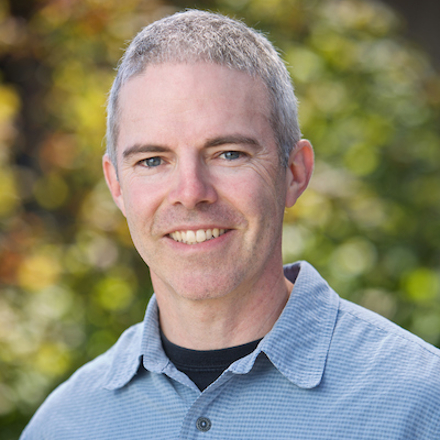
Peter Kalmus, climate scientist and returning friend of Crazy Town, used to live in Altadena, California, where one of the disastrous Los Angeles wildfires struck on January 7th. Having learned that his former house had burned, Peter penned an emotional article for the New York Times about his family’s decision to leave LA two years prior, out of safety concerns about frequent heat waves, drought, and just the sort of tragic conflagration that has reduced parts of LA to ashes. Get Peter’s take on this historic wildfire, what nature is trying to teach us, and how to think about unnatural disasters now and in the future. Note: this interview was recorded on January 24, 2025.
Warning: This podcast occasionally uses spicy language.
Sources/Links/Notes:
- Peter Kalmus’s article in the New York Times from January 10, 2025: “As a Climate Scientist, I Knew It Was Time to Leave Los Angeles”
- Peter’s book, Being the Change: Live Well and Spark a Climate Revolution
- News story about the huge Bobcat Fire that struck Los Angeles County in 2020
- Article in Science about the damage from Hurricanes Helene and Milton.
- Peter mentioned the Clausius-Clapeyron equation, which relates vapor pressure to temperature.
FeedSpot ranked Crazy Town as the #1 environmental economics podcast.


Comments
Wow. "Gaslighting." What an excellent concept! That is exactly what is going on with musk and trump etc.
Glad you're on YT now. We've had two spring episodes so far this winter. Birds even came back. Now we're looking at at least another week of beautiful spring weather in the "dead of winter." Climate Breakdown indeed!
https://policycommons.net/artifacts/17956920/counting-the-cost-2024/18853016/
https://www.frontiersin.org/journals/sociology/articles/10.3389/fsoc.2024.1411683/pdf
Sapolsky: "About 400 years ago it became 'common knowledge' that people couldn't control the weather, so you didn't have to burn the hag at the edge of town for being a witch and causing the crop failure. About 200 years ago it became 'common knowledge' that epilepsy was a disease, so you didn't have to burn the epileptic at the stake to free them from demonic possession. About 70 years ago it became common knowledge that schizophrenia was not caused by bad parenting…"
I think in allegories. I'm thinking that soon it will become common knowledge that Climate Breakdown is real (e.g., the Farmer's Almanac is useless). Now, that will be a decisive moment. That may be when the appropriate levers are best pressed. Or we could have evil fundie religions start a jihad against "Them's" blaming out-group classes of people. Let's hope/pray those who know the facts are able to press the correct levers (although I am not one of those folks).
I think Meadows' message combined with Brown and Hansen as well as recent and ongoing events indicates billions will die – evidently locked in at this point.
I want to address that comment from someone saying "What can I do when I'm stuck in the wrong place where no one is even talking about this and I don't know how to grow my own food and with a $15/hour job, I can't afford to move." The person doesn't say whether he or she is single, part of a duo, or has a family, but–
Twenty years ago I left a bad marriage with $5000, got a job that paid $24K/year, had it for 15 months, then quit to move back to rural West Virginia where my new partner lived. I spent three years in a downtown apartment, and for two years had a job that paid $20,000 a year. During that time he got himself out of debt and began saving too. We considered living on a sailboat, which he had once; or moving to Chile, or to Vermont–but Vermont was just too expensive. An old friend invited us to join a land trust on the ridge, and that's what we decided to do. We had $30K saved by then, and we built a comfortable, energy-efficient house doing all the work ourselves (and one thing about this area is very little hassle with building inspectors, etc). About the time we moved into the house, my mother died and left me $23K. We spent $9K of that putting in an off-grid solar electric system–got 30% tax breaks from both the feds and the state, which cancelled the tax I would have had to pay on that annuity. I've been growing half our food ever since.
Our income now comes from Social Security and puts us slightly below the poverty line, and we're steadily increasing our savings. This is partly because we're both frugal and had no debt; because the cost of living here is low, because now we need pay no rent or mortgage or electric bill and the property taxes are also low here.
But while this person is moaning about being stuck with no community, I'm moaning because my land trust with four leaseholds has two empty ones and I'm starting to wonder if we'll ever find someone to fill them. One is a well-set up homestead with a mostly furnished house and 16 grid-tied solar panels, and the previous leaseholder is willing to accept $10 for the improvements, which I think is a hell of a deal. If anyone is intrigued, they can find us at the intentional communities website at ic.org, in the Directory, under Hickory Ridge. And while you're there, if you like the idea of community, you'll find hundreds of other places, all over this country and elsewhere.
All that was to address the "can't afford" bit. As for not knowing how to grow your own food, there is a great deal to learn–but first-year gardens are generally quite successful and you can probably find mentors. Even starting a small garden will give you some experience and some tools. You can build on that later. But get started–there may not be much time left
Thanks for sharing your story! Maybe we need to set up a matchmaking service for those with land/space/rooms and those looking to homestead, get back to the land, or just have an affordable place to live.